
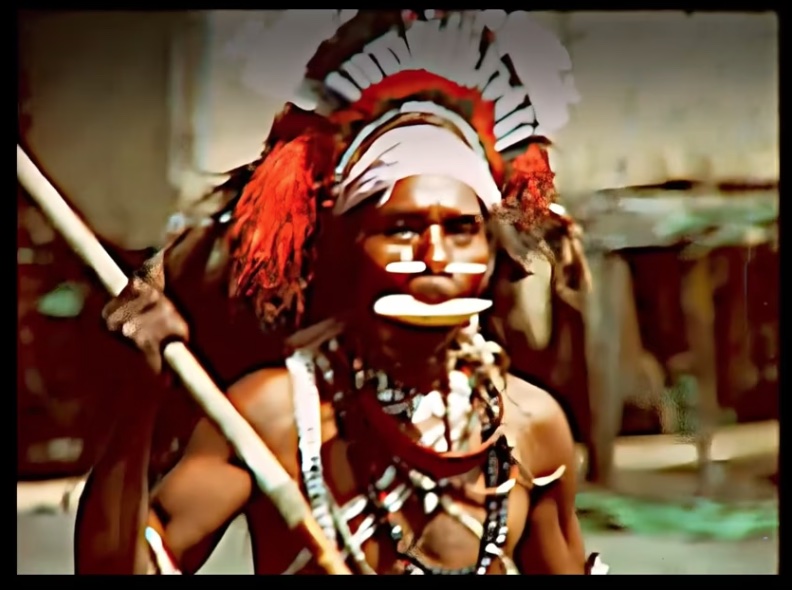
The colonial government in 20th century Papua New Guinea required its indigenous communities to shift from subsistence food-growing and barter-and-trade to a cash-based market economy. This economic policy upset long-standing social and cultural practices of the Managalase people of Oro Province. This included pressure to stop indigenous adolescent male body tattooing, which had served as a crucial male coming-of-age ritual for centuries.
This documentary film examines the nature and significance of Managalase body tattooing. Once banned, tattooing could no longer fulfill the defining roles it served in traditional gender identity formation, family relations, and social organization among the Managalase. The footage in Kuije Kanan documents the reenactment by elders of traditional body tattooing, for the younger generation of the Managalase. The project was filmed by John Caldwell on small format film and videotape, during ethnographic fieldwork with the Managalase by anthropologist Dr. William McKellin, in July 1984, in Siribu, Dea, and Kavan villages, in Oro Province.